Choosing between laser welding and arc welding affects production speed, joint quality, equipment cost, and operator training. The right process depends on material, thickness, joint design, and production volume. A common question is: what is the difference between laser welding and arc welding?
Laser welding uses a concentrated beam to create a narrow, controlled weld. It often produces low distortion and clean seams on suitable metals. Arc welding uses an electric arc between an electrode and the workpiece. It offers flexibility, proven field performance, and practical access to many joint positions. However, each method has limits. Laser systems require careful alignment, stable fixturing, and significant investment. Arc welding may introduce more heat, spatter, and post-weld finishing.
Experienced welding engineers do not choose a process from speed claims alone. They examine weld penetration, heat-affected zones, surface condition, maintenance needs, and inspection requirements. A thin stainless-steel panel may benefit from laser precision. A thicker structural joint, repaired outdoors, may favor arc welding. Real workshops are less predictable than brochures suggest. Fixtures move, surfaces become contaminated, and operators face changing workloads.
This guide compares both methods through practical criteria, including cost, productivity, safety, material compatibility, and weld appearance. It also considers hybrid approaches where appropriate. No process wins every job. A fast weld can still be unsuitable if inspection reveals incomplete fusion. Careful trials, qualified procedures, and documented testing provide more reliable decisions than assumptions.
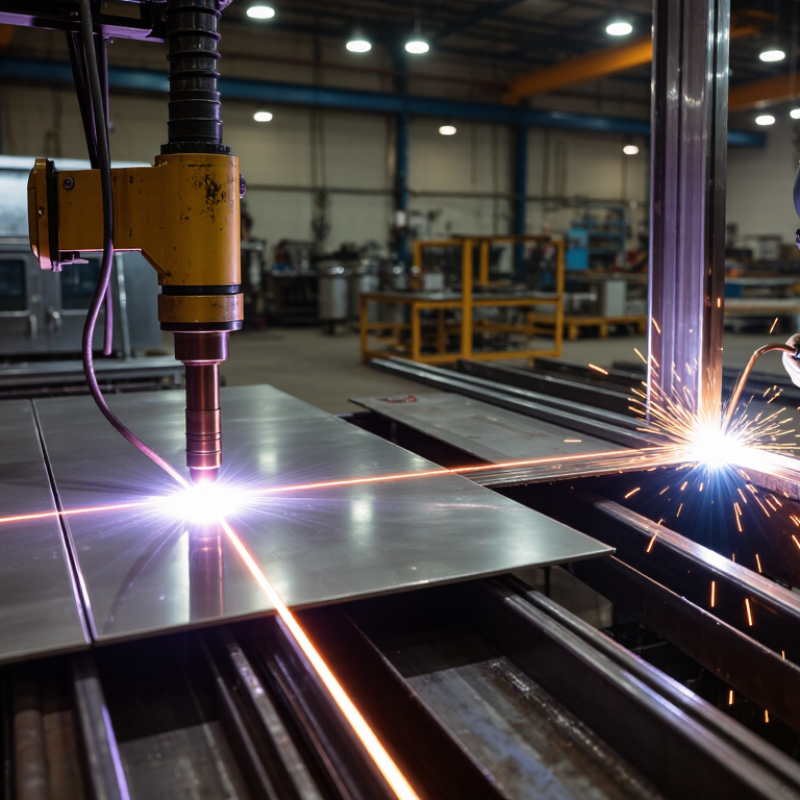
Laser welding joins metal with a concentrated beam of light. The beam melts a narrow area, often creating a small and deep weld pool. This focused heat can reduce distortion, which matters when joining thin stainless steel panels or precise mechanical parts. The process usually requires accurate joint preparation and stable fixturing. A gap that looks minor can weaken the result. Laser welding is fast, clean, and highly repeatable, but its equipment and setup demands are considerable.
Arc welding uses an electric arc to generate heat between an electrode and the workpiece. The arc melts the base metal and, depending on the method, a separate filler wire or electrode. Common processes include gas metal arc welding, gas tungsten arc welding, and shielded metal arc welding. Each method behaves differently. Some produce visible spatter, while others offer better control on thin sections. Shielding gas or flux protects the molten pool from atmospheric contamination.
In practical fabrication, arc welding often suits repairs, structural frames, and varied joint positions. Laser welding fits automated production and parts requiring narrow heat input. The distinction is not always clean. A skilled operator can produce excellent arc welds, while a poorly aligned laser setup can fail quickly. Material reflectivity, thickness, access, production volume, and operator training should guide the decision. Cost alone can mislead. A faster weld may still need expensive inspection or tighter preparation.
Laser and arc welding differ mainly in how they deliver heat to the joint. Laser welding concentrates energy into a narrow beam, creating deep penetration with a small heat-affected zone. Arc welding uses an electric arc between an electrode and the workpiece. It usually produces a wider weld pool and more visible thermal distortion.
In practical fabrication, laser welding can provide high speed, clean seams, and precise results on accurately fitted parts. It also demands stable alignment, consistent surfaces, and careful parameter control.
Arc welding is more forgiving when gaps or changing positions appear. It handles many material thicknesses and field conditions, but it may require filler metal, more post-weld cleaning, and greater distortion control.
A neat bead is not proof of a strong joint. Internal defects still require suitable inspection. Fit-up matters most.
Tips: Check joint gaps before choosing the process. Use laser welding when precision, speed, and low distortion justify the setup. Choose arc welding when access, thickness variation, or repair flexibility matters more. Test representative samples, then inspect penetration, hardness, and distortion. I have seen fast production decisions fail because surface preparation was treated as a minor detail. It was not. Welding performance depends on material grade, joint design, operator skill, shielding, and actual production conditions. Cost comparisons should include preparation, inspection, maintenance, and rework.
Material thickness, joint design, and fit-up often decide the welding method. Laser welding suits thin stainless steel, carbon steel, aluminum, and some nickel alloys. It creates a narrow heat-affected zone and limits distortion. Butt joints and clean lap joints usually perform well. The parts must align closely. Small gaps can interrupt penetration.
Arc welding is more forgiving. It handles thicker plates, uneven edges, and site repairs with greater flexibility. Shielded, gas-metal, or gas-tungsten processes can join carbon steel, stainless steel, aluminum, and many low-alloy materials. Fillet joints, T-joints, corner joints, and heavy butt joints are common choices. Arc welding also works better when access is limited or the joint needs filler metal to bridge a gap.
Fit-up matters greatly. Laser welding rewards precision, rigid fixtures, and clean surfaces. Arc welding tolerates more variation, but it usually adds more heat and may require grinding or straightening. In production trials, I would inspect penetration, distortion, and the heat-affected zone rather than trust appearance alone. A bright bead can still hide incomplete fusion. That is an easy mistake.
Material reflectivity, thickness changes, and joint access can alter the result. Dissimilar metals require extra testing.
Weld coupons, bend tests, and visual inspections help confirm the choice before full production. Sometimes the practical answer is not the faster process.
Choosing between laser welding and arc welding depends on more than the machine price. Arc welding usually costs less to start. Its equipment is widely available, and many technicians already understand the process. Consumables, shielding gas, and cleanup still affect the final bill. Laser welding requires higher initial investment. However, it can reduce filler use, distortion, and finishing work on repeatable joints.
Speed changes with the application. A laser can weld thin sections quickly, with a narrow heat-affected zone and limited deformation. This advantage matters when production runs are long and parts need consistent dimensions. Arc welding remains practical for thicker materials, varied joint positions, and repair work. It is often more forgiving when fit-up is imperfect. Laser systems demand accurate alignment and stable fixtures. A spreadsheet can still mislead.
Precision is one of laser welding’s strongest benefits. Small, controlled welds can preserve delicate components and reduce rework. Yet surface condition, joint gaps, and operator setup still matter. Arc welding offers broader flexibility, but heat input may create warping or visible cleanup marks. Safety requires equal attention in both processes. Arc work produces intense light, fumes, sparks, and heat. Laser work adds serious eye and skin hazards, requiring guarded areas, interlocks, and controlled access. Proper ventilation, training, inspection, and protective equipment are not optional. The safer choice is the process your team can control reliably every day.
| Comparison Dimension | Laser Welding | Arc Welding | Practical Conclusion |
|---|---|---|---|
| Initial Equipment Cost | Generally high. The system may require a laser source, optics, motion equipment, shielding gas, safety enclosure, and dedicated tooling. | Generally low to moderate. A power source, torch, cables, shielding-gas equipment, and basic fixtures are typically sufficient. | Arc welding is usually more economical for occasional work, repairs, and low-volume production. |
| Operating Cost | Can be low per part at high utilization because of fast travel speeds, low heat input, and reduced finishing. | Consumables such as wire, electrodes, shielding gas, contact tips, and abrasive finishing materials can increase cost. | Laser welding becomes more cost-effective when production volume and repeatability justify the investment. |
| Typical Welding Speed | Often approximately 1–10 m/min for suitable thin-to-medium sheet applications, depending on material, joint design, power, and penetration requirements. | Commonly approximately 0.2–1 m/min, although the actual rate varies considerably by process, material thickness, position, and operator technique. | Laser welding generally offers higher travel speed, especially on repetitive sheet-metal joints. |
| Precision and Repeatability | Very high when the joint fit-up, focus, alignment, and process parameters are controlled. Narrow, concentrated beams support fine welds. | Good, but results depend more heavily on operator skill, torch control, consumable condition, and welding position. | Laser welding is usually preferred for small, repeatable welds and automated manufacturing. |
| Heat-Affected Zone | Typically narrow because heat is concentrated in a small area and the process can use low overall heat input. | Typically wider because the arc produces a larger heat source and often deposits more heat into the workpiece. | Laser welding can reduce distortion and protect heat-sensitive components, provided joint preparation is accurate. |
| Distortion and Post-Weld Finishing | Usually low distortion and limited spatter; some applications require little or no grinding. | More potential for distortion, spatter, slag, and visible weld reinforcement, depending on the arc process. | Laser welding may reduce finishing time, while arc welding can be advantageous when cosmetic appearance is less important. |
| Joint Fit-Up Tolerance | Generally narrow. Gaps, edge mismatch, contamination, and inconsistent part positioning can cause lack of fusion or unstable penetration. | Generally more forgiving because filler metal can bridge certain gaps and compensate for moderate variation. | Arc welding is often more suitable for rough-fit parts, field work, and variable component conditions. |
| Material Thickness Range | Especially effective for thin and medium sheet. Thick sections may require multiple passes, beam oscillation, hybrid methods, or joint-specific engineering. | Highly versatile for thin, medium, and thick sections; process selection and filler-metal choice can be adjusted to the application. | Arc welding generally offers broader thickness flexibility, particularly for heavy fabrication. |
| Automation Suitability | Excellent for robotic or CNC production when parts are consistent and process monitoring is available. | Suitable for automation, but wire delivery, torch access, spatter, and arc-start behavior may require additional control. | Laser welding is often favored for high-volume, repeatable production lines. |
| Operator Skill Requirements | Requires training in laser safety, optics, parameter development, alignment, and process monitoring. | Requires welding technique, process-specific training, joint preparation knowledge, and control of torch or electrode movement. | Both require qualified personnel; laser systems demand stronger emphasis on equipment integration and optical safety. |
| Safety Considerations | Requires strict control of reflected and direct laser radiation, interlocked enclosures or controlled areas, eye protection, fumes, heat, and fire risks. | Requires protection from arc radiation, hot metal, sparks, fumes, electric shock, noise, and fire. Appropriate welding helmets and protective clothing are essential. | Neither process is inherently risk-free. Laser systems need specialized beam controls; arc welding needs extensive protection from visible and ultraviolet radiation and spatter. |
| Portability and Field Use | Usually less portable because of the laser source, enclosure, optics, cooling, and control equipment. | Highly portable options are available and commonly used for construction, maintenance, installation, and repair. | Arc welding is generally the better choice for remote locations and on-site repairs. |
| Best-Fit Applications | High-volume production, thin sheet, precision components, low-distortion assemblies, and automated manufacturing. | Heavy fabrication, structural work, maintenance, repair, outdoor work, variable fit-up, and low-to-medium production volumes. | Choose according to volume, joint access, material thickness, fit-up quality, required appearance, and available safety controls. |
Note: The performance ranges are typical industry estimates rather than guaranteed specifications. Actual results depend on material type, thickness, joint design, equipment power, shielding conditions, part tolerances, welding position, and operator or automation capability.
Choosing between laser welding and arc welding starts with the joint, not the machine. Examine material, thickness, tolerance, production volume, and repair access. A laser suits thin stainless panels, clean seams, and repeatable production. It creates a narrow heat-affected zone and limited distortion. However, its focused beam demands accurate fit-up. Small gaps can produce incomplete fusion.
Arc welding remains practical for thicker steel, variable joint gaps, and outdoor maintenance. A skilled welder can adjust travel speed, current, and filler metal during the work. That flexibility matters on a structural bracket with uneven edges. It also reduces dependence on extremely precise fixtures. The trade-off is greater heat input, more spatter, and possible post-weld cleaning. This rule is imperfect.
Workforce capability also affects the decision. The American Welding Society’s 2023 Welding Workforce Data Report projected a U.S. shortage of 330,000 welding professionals by 2028. A process requiring advanced programming may be difficult without trained technicians. The U.S. Bureau of Labor Statistics projects about 45,600 annual openings for welding occupations from 2024 to 2034. Therefore, evaluate training time and operator availability, not only cycle speed. Test representative samples first. Measure penetration, distortion, consumable use, inspection results, and total labor. A faster weld can still become the wrong choice when fixtures, cleaning, or rejected parts dominate the cost.
Laser welding joins metal with a concentrated light beam. The beam melts a narrow, deep area. It often creates low distortion on thin panels and precise parts. Small gaps can still weaken the joint.
Arc welding uses an electric arc between an electrode and the workpiece. The arc melts the base metal and sometimes filler material. Shielding gas or flux protects the molten pool. It suits repairs, frames, and varied joint positions.
Laser welding can be faster on thin, repeatable parts. Its narrow heat zone may reduce finishing work. Arc welding often performs better on thick materials and repairs. The answer depends on the joint.
Laser welding usually offers tighter control and smaller welds. It can protect delicate components from excessive heat. Accurate alignment and stable fixtures remain essential. Precision is not automatic.
Arc welding usually costs less to start. Its equipment is widely available, and many technicians know the process. Consumables, gas, cleanup, and inspection still increase the final cost. Laser equipment costs more initially but may reduce filler use and rework.
Arc welding is generally more forgiving when joint gaps are uneven. Laser welding needs careful preparation and consistent alignment. A tiny visible gap may become a serious weakness. That detail is easy to underestimate.
Neither process is automatically safe. Arc welding creates intense light, fumes, sparks, and heat. Laser welding creates serious eye and skin hazards. Guarded areas, ventilation, training, protective equipment, and inspections are necessary.
Consider material thickness, reflectivity, joint access, production volume, and operator training. Choose laser welding for controlled, repeated joints with strict dimensions. Choose arc welding for repairs, thicker materials, and changing positions. Machine price alone can mislead. The practical choice is the process your team controls reliably every day.
Choosing between laser welding and arc welding depends on the project’s materials, joint design, production goals, and working conditions. Laser welding uses a concentrated beam of light to create narrow, precise welds with limited heat distortion, making it suitable for thin materials, delicate components, and automated high-speed production. Arc welding uses an electrical arc to generate heat and is available in several flexible processes, making it practical for thicker materials, repairs, structural work, and varied job-site environments.
Understanding what is the difference between laser welding and arc welding helps clarify the decision. Laser welding generally offers faster operation, cleaner results, and greater precision, but it may require higher equipment investment and careful joint preparation. Arc welding is usually more affordable and adaptable, although it can produce more heat-affected areas, spatter, and slower weld speeds. When selecting a method, compare material type, thickness, joint accessibility, required strength, appearance, production volume, operator skill, maintenance, and safety controls.

STYRL Laser