Choosing a laser welding machine is rarely about price alone. Manufacturers must consider material thickness, joint design, production speed, and maintenance support. The real question is not only what industries use laser welding machines, but why they select specific equipment for demanding work.
Automotive factories often use these systems for battery trays, body panels, exhaust parts, and precision components. A stable weld can reduce distortion across long production runs. Electronics manufacturers need controlled heat for connectors, sensors, and small enclosures. Medical equipment producers also value clean, repeatable welds on stainless steel instruments and sealed assemblies. Aerospace suppliers may require deeper process monitoring, traceability, and qualified operators.
Chinese laser welding machines have become competitive in these fields. Many models combine fiber lasers, automated stages, vision systems, and programmable controls. In practical testing, however, performance depends on more than the laser source. Beam stability, fixture accuracy, shielding gas delivery, and software integration can change the final result. Small details matter.
Poor training can undermine excellent hardware.
Food-processing equipment makers may choose laser welding for smooth stainless steel surfaces and reduced finishing work. Metal furniture, cookware, hardware, and energy-storage companies also use the technology for repeatable seams. Yet not every machine suits every factory. A low-cost model may appear efficient, but weak after-sales support can increase downtime. That risk is easy to overlook.
This guide examines the industries using leading Chinese laser welding machines. It compares their practical requirements, common applications, and selection criteria. Some conclusions remain conditional, because supplier quality and factory conditions vary. Hands-on trials, sample welding, safety checks, and service verification should influence every final decision.
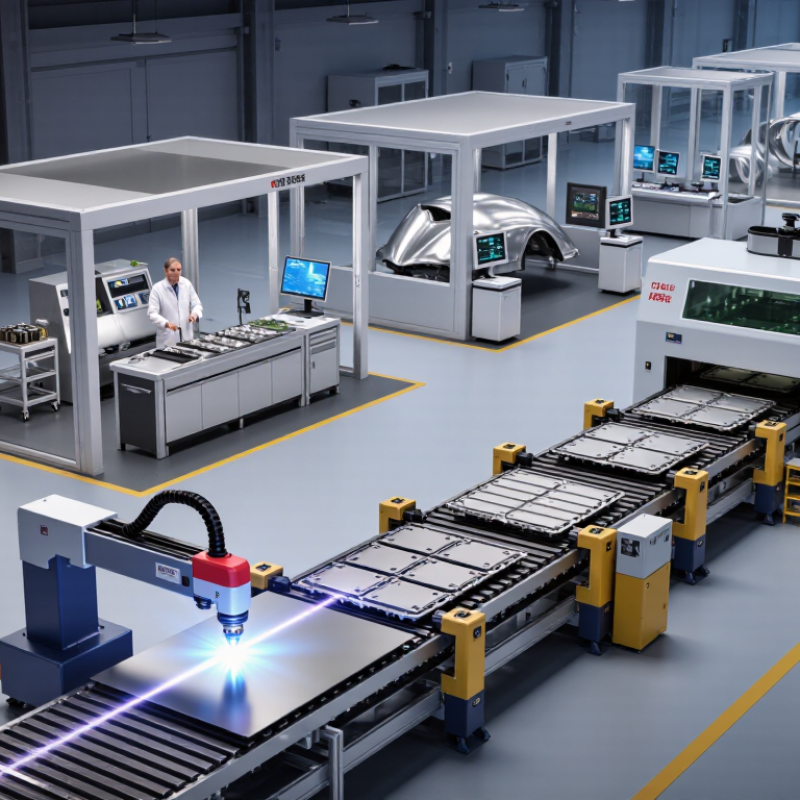
Chinese laser welding machines suit industrial use because they combine precise energy control, scalable automation, and competitive production costs. Fortune Business Insights valued the global laser welding machine market at about USD 2.7 billion in 2023, with continued growth expected through 2030. This demand reflects practical needs in automotive parts, metal fabrication, electronics, and energy equipment.
A fiber laser can create a narrow weld with limited heat distortion. That matters when joining stainless-steel enclosures or thin battery components. On a factory floor, operators can adjust power, pulse width, shielding gas, and travel speed through digital controls. Robotic integration also supports repeatable seams across long production runs. Small details matter. Poor gas coverage can still produce oxidation and porosity.
Chinese manufacturers often offer modular systems, local customization, and shorter equipment lead times. These advantages help smaller factories adopt laser welding without purchasing oversized equipment. However, a low purchase price can mislead. The laser source, motion system, cooling unit, software, and after-sales support must be evaluated together. The ISO 15614-11 standard provides a useful framework for qualifying laser welding procedures, while IEC 60825-1 addresses laser safety requirements. Market reports show strong expansion, but growth alone does not prove reliability. Buyers should inspect sample welds, monitor penetration depth, and request documented test results before production approval.
| Industry | Typical Applications | Common Materials | Typical Laser Configuration | Why Laser Welding Is Suitable | Important Selection Criteria |
|---|---|---|---|---|---|
| Automotive and Transportation | Battery trays, body components, exhaust parts, gears, brackets, and lightweight structural assemblies. | Carbon steel, stainless steel, aluminum alloys, galvanized steel, and selected copper components. | Continuous-wave fiber laser systems, commonly selected from approximately 1–6 kW depending on thickness, joint design, and production speed. | High welding speed, a narrow heat-affected zone, low distortion, and suitability for automated production lines. | Beam quality, robotic or gantry integration, seam tracking, process monitoring, safety enclosure, and repeatability. |
| New Energy and Battery Manufacturing | Battery tabs, busbars, cell covers, battery housings, cooling plates, and module or pack components. | Copper, aluminum, nickel-plated metals, stainless steel, and aluminum alloys. | High-stability fiber laser systems, often paired with galvanometer scanners, wobble heads, vision systems, or dual-wire feeding for selected joints. | Low heat input can help limit deformation, while precise energy control supports small tabs, thin sheets, and conductive joints. | Electrical resistance of the joint, spatter control, airtightness, inline inspection, cleanliness, and precise fixturing. |
| Electronics and Electrical Equipment | Sensor housings, connectors, terminals, switchgear, heat sinks, and precision enclosures. | Copper alloys, aluminum, stainless steel, nickel alloys, and thin coated sheet metal. | Low- to medium-power pulsed or continuous-wave fiber laser systems selected according to part size and thickness. | Fine spot control, limited thermal impact, clean weld profiles, and compatibility with high-precision automated fixtures. | Pulse shaping, focal-position stability, microscopic inspection, fume extraction, and protection against contamination. |
| Metal Fabrication and Machinery | Cabinets, frames, machine bases, pipes, flanges, sheet-metal assemblies, and custom equipment. | Mild steel, stainless steel, aluminum, galvanized sheet, and selected titanium alloys. | Handheld or automated fiber laser welding systems, generally configured from approximately 1–3 kW for many sheet-metal jobs. | Fast setup, reduced filler-metal use for suitable joints, lower post-weld finishing requirements, and flexible processing. | Operator training, cooling capacity, torch ergonomics, joint tolerance, spare parts, and local technical support. |
| Aerospace and Precision Engineering | Thin-wall components, ducts, brackets, fluid-system parts, and precision structural assemblies. | Aluminum alloys, titanium alloys, stainless steel, nickel alloys, and heat-resistant materials. | High-control fiber or pulsed laser systems with precision motion stages and carefully qualified process parameters. | Accurate energy delivery, low distortion, narrow weld seams, and strong potential for traceable automated production. | Qualification procedures, weld penetration control, non-destructive testing, data traceability, and strict material cleanliness. |
| Medical Equipment and Instruments | Surgical instruments, small housings, implants, tubing, fluid chambers, and laboratory equipment. | Stainless steel, titanium, cobalt-chromium alloys, nickel alloys, and selected precious metals. | Precision pulsed or low-power continuous-wave systems with fine beam control and specialized fixturing. | Small weld footprints, low distortion, controllable penetration, and reduced need for mechanical finishing. | Surface cleanliness, weld repeatability, biocompatibility requirements, documentation, inspection, and process validation. |
| Kitchen, Appliance, and Consumer Products | Cookware, sinks, appliance panels, water tanks, handles, decorative parts, and stainless-steel assemblies. | Stainless steel, aluminum, galvanized steel, mild steel, and coated sheet metal. | Handheld or automated fiber laser systems, commonly selected around 1–3 kW for many thin- and medium-gauge applications. | High throughput, visually clean seams, reduced grinding and polishing, and good compatibility with repetitive production. | Appearance requirements, distortion control, fixture accuracy, fume extraction, operator safety, and service availability. |
Note: Laser power and configuration are indicative ranges rather than universal specifications. The appropriate system depends on material type, thickness, joint geometry, required penetration, production volume, automation level, and applicable safety standards.
They weld body panels, door frames, roof rails, and chassis components. Fiber lasers create narrow welds with limited heat distortion. Robotic heads follow programmed paths around complex joints. Small adjustments matter.
Battery trays, cooling plates, aluminum sections, and copper connections require firm clamping. Even small gaps can weaken the finished joint. Fixtures must hold parts steadily during welding. Speed alone is not enough.
Factories weld battery tabs, trays, cooling plates, busbars, and storage modules. Controlled energy helps limit heat near sensitive cells. Engineers still test resistance, penetration, and repeated-cycle strength. A clean surface proves little by itself.
Copper and aluminum can reflect laser energy and complicate process control. Inexperienced operators may create hidden defects with excessive speed. Parameter trials should examine power, pulse duration, travel speed, and focus. Reflection remains troublesome.
Bus and rail factories join aluminum sections, stainless steel panels, and interior frames. Accurate fixtures help maintain alignment across long assemblies. Engineers inspect joints for vibration resistance and consistent penetration. Real conditions can expose weaknesses.
Cameras can identify missing welds and alignment problems. They may not reveal internal porosity. Destructive samples can show hidden flaws inside the joint. Testing should include polished samples and difficult production pieces.
They weld sensor housings, connectors, thin copper parts, battery cells, and cooling plates. Low heat input helps protect nearby insulation and circuits. Automated fixtures improve positioning across large batches. Electrical performance still needs verification.
Manufacturers may seal instruments, fluid channels, sensor enclosures, and small precision components. They should verify cleanliness, dimensional accuracy, and sterilization effects. Each weld needs records linking material lots with inspection results. Documentation can feel tedious, but missing records create uncertainty.
Automation can control paths, focus, speed, and inspection steps. Operators still monitor shielding gas, calibration, lens cleanliness, and machine condition. Manual touch-up may remain necessary. Complete automation is not guaranteed.
They should repeat trials, clean lenses, maintain calibration, and train operators carefully. Records should track settings, defects, repairs, and inspection results. Calibration drift may appear quietly. Honest failure analysis matters.
Chinese laser welding machines are increasingly suitable for industrial use because they combine precision, speed, automation, and flexible process control with practical operating costs. Many models can handle different metals, thin materials, complex joints, and continuous production requirements while supporting consistent weld quality. Their compatibility with robotic systems, inspection tools, and customized workstations also allows manufacturers to improve productivity and reduce material waste.
When considering what industries use laser welding machines, automotive and transportation manufacturing are major areas, where the equipment is applied to body components, batteries, frames, and other precision parts. Electronics manufacturers use it for delicate connections and compact assemblies, while energy companies rely on it for battery modules, storage systems, and power-related components. Medical equipment production benefits from clean, accurate welds for instruments and specialized devices. Businesses should select a machine according to material type, thickness, welding speed, accuracy, automation needs, maintenance support, safety features, and total operating cost.

 STYRL Laser