In modern manufacturing, precision and efficiency are paramount. Laser welding has emerged as a vital technology in this landscape. But how does laser welding work? This process involves focusing a laser beam to melt materials and create strong bonds. The high heat generated by the laser enables precise control over the welding area, minimizing distortion.
The applications of laser welding are diverse. Industries ranging from automotive to aerospace benefit from its speed and reliability. It allows for complex geometries and tight tolerances, which traditional methods often struggle to achieve. However, understanding the intricacies of laser welding is essential for businesses looking to implement this technology effectively.
Not all laser welding techniques are the same, and choices must be made carefully. Factors such as material type and thickness play crucial roles in the success of the weld. Sometimes the results vary significantly, leading to outcomes that need further examination. By exploring how does laser welding work, manufacturers can optimize processes and improve product quality. The potential is immense, but it requires an informed approach to fully realize its benefits.
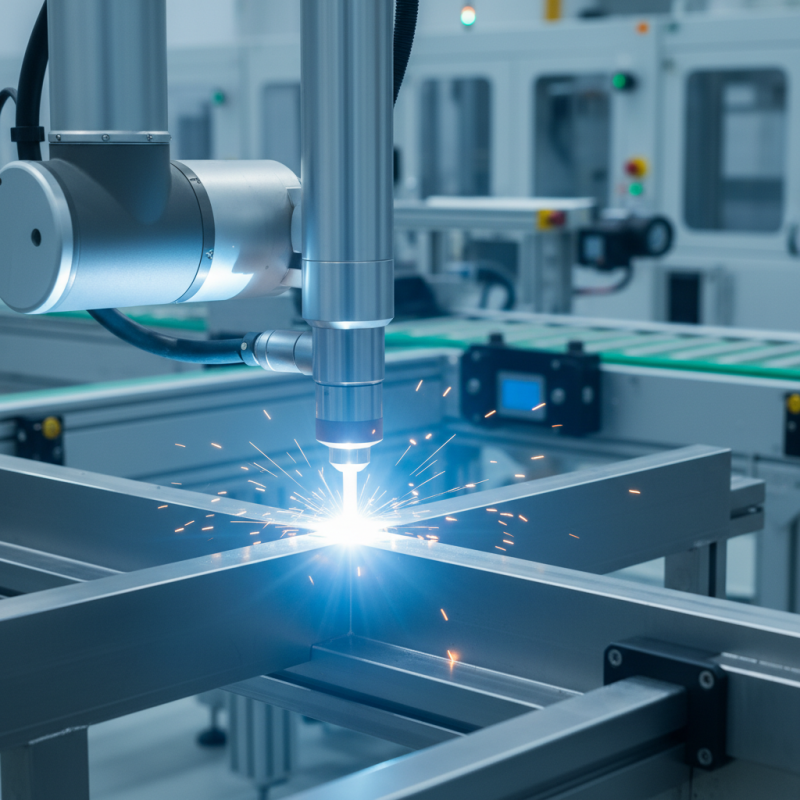
Laser welding has transformed modern manufacturing by offering precision and efficiency. This advanced technique utilizes focused laser beams to join materials, primarily metals. The process begins by directing a concentrated beam onto the workpieces. The energy generated by the laser melts the edges, creating a strong bond as the molten material cools. This method allows for minimal heat input, reducing distortion in sensitive components.
One of the key benefits of laser welding is its ability to join thin materials with high accuracy. It enables manufacturers to produce intricate designs that were once deemed impossible. However, achieving optimal results requires a deep understanding of the materials involved and the right settings. Mistakes in parameters can lead to weak welds or excessive heat damage.
Despite its many advantages, laser welding is not without challenges. Equipment costs can be substantial, which may deter smaller manufacturers. Training staff to handle advanced laser systems is essential but often overlooked. Continuous assessment of process parameters is vital to maintain quality. This need for constant vigilance requires a dedication to precision and expertise that can be difficult to sustain in fast-paced environments.
Laser welding has transformed modern manufacturing by introducing precision and efficiency. The fundamental principle relies on the concentrated beam of light to melt materials. This process allows for deep weld penetration and minimal thermal distortion. In a study from the International Journal of Advanced Manufacturing Technology, it was reported that laser welding can achieve joint strengths exceeding 95% of the base materials.
The technology operates by focusing a laser beam through optics and delivering it to the workpiece. The energy from the laser heats the material rapidly in targeted areas, causing it to melt and join with adjoining pieces. According to industry reports, nearly 35% of manufacturers have adopted laser welding techniques over the last five years. This increase reflects the growing demand for high-quality welds in sectors like automotive and aerospace.
However, challenges persist. Not all materials respond well to laser welding. Material thickness and reflectivity can affect outcomes. For example, certain alloys may not absorb enough laser energy, leading to incomplete or weak welds. Continuous research is vital in overcoming these limitations. Data highlights areas needing improvement, as about 20% of initial trials in laser welding still result in defects, signifying room for innovation and refinement in the field.
Laser welding has transformed modern manufacturing with its precision and efficiency. Various types of laser welders serve different applications in numerous industries. For instance, fiber laser welders are commonly used in automotive manufacturing. Their high power allows for deep welds, which are vital given the strict safety standards in this sector. According to a 2022 industry report, fiber lasers have shown a 30% increase in penetration depth compared to traditional methods.
Another notable type is the diode laser welder, which excels in joining thin materials. The aerospace industry often relies on this technology for its lightweight fabrication needs. A recent analysis highlighted that diode lasers can reduce assembly times by 25%, providing a competitive edge in production flow. However, the challenge remains in achieving consistent quality, particularly in varying material thicknesses. This inconsistency can lead to increased inspection costs and production delays.
The versatility of laser welding is evident, but it is not without its limitations. High upfront costs and the need for skilled operators can be barriers for some manufacturers. Although the technology promises significant returns, companies must critically evaluate their current capabilities. They should weigh potential benefits against the investment needed for equipment and training.
Laser welding has transformed modern manufacturing with its precision and efficiency. One key advantage is its ability to create strong, durable joints without the heat-affected zones common in traditional welding. According to a report by the International Journal of Advanced Manufacturing Technology, laser welding can produce joints with tensile strengths exceeding 90% of the base material’s strength. This high reliability reduces the risk of post-weld failures in critical structures.
Another significant benefit is the speed of laser welding. It can reduce cycle times by up to 50% compared to conventional methods. This efficiency translates into lower production costs and increased output. Data from the American Welding Society indicates that manufacturing plants implementing laser welding have reported increased throughput, helping them meet growing market demands. However, transitioning to laser technologies comes with challenges, including the need for skilled operators and initial investment costs. These hurdles prompt companies to weigh short-term expenses against long-term gains in productivity and efficiency.
Laser welding has been evolving rapidly, becoming a key technology in modern manufacturing. The future of this technique appears promising, with numerous innovations on the horizon. As industries seek higher efficiency and precision, laser welding systems are seeing enhancements in speed and accuracy. The integration of AI-driven monitoring systems is one example. These systems can adjust parameters in real time, ensuring flawless welds and reducing defects. This adaptability represents a significant shift in how welding is performed.
Moreover, sustainable practices are becoming a focus in the development of laser welding technologies. Researchers are exploring eco-friendly laser sources and energy-efficient processes. Companies are investing in technology that minimizes waste while maximizing productivity. Yet, challenges remain. The high initial cost of advanced systems may deter smaller manufacturers. Additionally, the need for skilled operators to handle complex equipment can limit widespread adoption.
Another trend is the miniaturization of laser welding equipment. Smaller devices can facilitate precise welding in intricate components, especially in the electronics and automotive sectors. This trend not only caters to evolving manufacturing demands but also enhances flexibility on production lines. The path forward for laser welding looks ambitious, yet it is essential to address these evolving challenges to fully harness its potential.
| Application Area | Laser Type | Common Materials | Advantages | Future Trends |
|---|---|---|---|---|
| Automotive | Fiber Laser | Steel, Aluminum | High Speed, Precision | Integration with AI |
| Electronics | CO2 Laser | Copper, PCB Materials | Minimal Heat Affected Zone | Micro Welding Techniques |
| Aerospace | Nd:YAG Laser | Titanium, Composite Materials | Durability, Lightweight | Automation & Robotics |
| Medical Devices | Diode Laser | Stainless Steel, Biocompatible Materials | Precision, Clean Sealing | Personalized Medical Devices |
| Jewelry | Solid State Laser | Gold, Silver | Detailed Designs, Less Waste | 3D Laser Printing |
: Laser welding is a technique that uses lasers to join materials together. It offers precision and efficiency.
Laser welding can join various materials, including metals and plastics, often used in automotive and aerospace industries.
Laser welding creates strong joints and reduces heat-affected zones, improving strength and lowering the risk of failures.
It can reduce cycle times by up to 50%, leading to faster production and lower costs.
High initial costs and the need for skilled operators can be barriers to adoption for some companies.
Yes, innovations include AI-driven monitoring systems that improve speed and accuracy, and eco-friendly practices to minimize waste.
It encourages energy-efficient processes and aims to reduce waste during manufacturing.
The future looks promising, with ongoing improvements in speed, accuracy, and miniaturization of equipment for precise applications.
Skilled operators are essential to manage complex equipment, ensuring the quality of the welds produced.
Companies should evaluate their needs, existing capabilities, potential benefits, and the necessary investment for equipment and training.
Laser welding has emerged as a pivotal technique in modern manufacturing, utilizing concentrated laser beams to join materials with precision. Understanding how does laser welding work involves recognizing its reliance on principles of light energy focused through optics, allowing for high-speed processing and minimal thermal distortion. This process is facilitated by various types of laser welders, each suited for specific applications ranging from automotive to aerospace, ensuring versatility in industrial settings.
The advantages of laser welding over traditional methods include enhanced accuracy, greater speed, and reduced heat input, leading to stronger joints and less post-weld cleanup. As the technology continues to evolve, future trends are pointing towards innovations such as automation and integration of laser systems with new materials, promising even greater efficiencies and possibilities in manufacturing processes.

STYRL Laser