How strong is laser welding compared to traditional welding? The answer depends on more than the welding process. Material type, joint design, penetration, and inspection all affect the finished joint. Laser welding can create a narrow, deep weld with a small heat-affected zone. That can reduce distortion on thin stainless-steel panels or precision components. Traditional arc methods, including MIG and TIG, can offer greater flexibility for thicker sections, repairs, and less automated work. Neither process guarantees a stronger weld by itself.
Dr. Sindo Kou, a respected welding-metallurgy author, provides a useful principle through his published work: weld performance depends on the interaction between materials, process conditions, and solidification. This is a paraphrase, not a verbatim quotation. It matters in practice. A clean-looking laser seam may still have incomplete fusion beneath the surface. A broader arc weld can also contain defects if fit-up or technique is poor. Small details count: joint gaps, surface contamination, travel speed, and filler choice can change the result.
This guide compares seven practical strengths, including penetration, heat input, consistency, speed, repairability, material compatibility, and performance under service loads. It also examines trade-offs that are easy to overlook. For a fair comparison, engineers should review the actual joint specification and test results, such as tensile or fatigue data, rather than rely on appearance alone. The takeaway is simple: match the process to the application, then verify the weld.
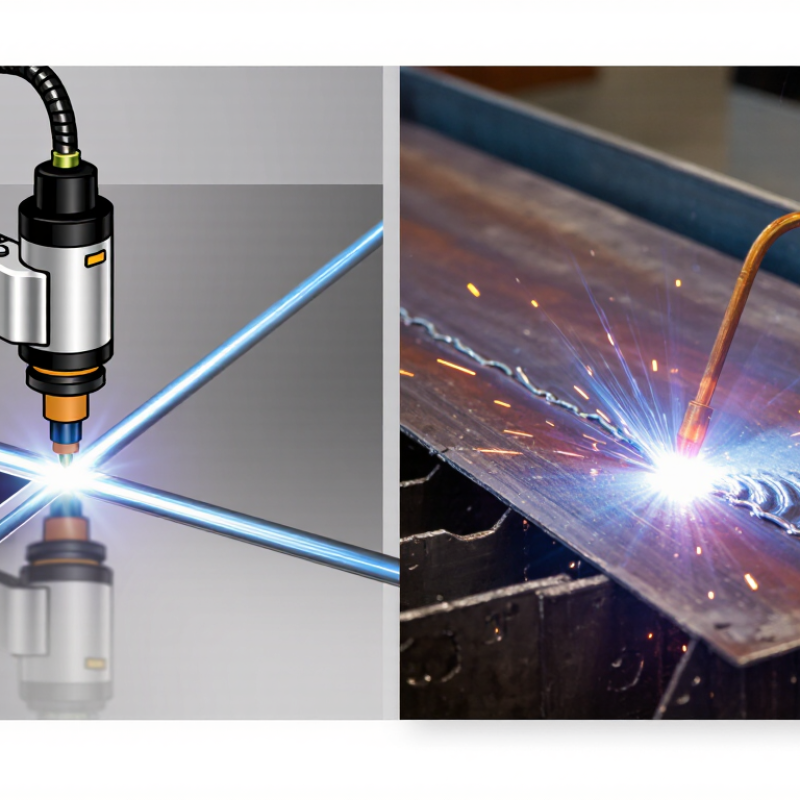
Laser and traditional welding differ mainly in how heat reaches the joint. Laser welding concentrates a beam into a small spot, creating a narrow weld and heat-affected zone. Traditional arc methods, such as gas metal arc and gas tungsten arc welding, use an electrical arc; they often add filler wire or rod. The American Welding Society’s Welding Handbook describes these arc processes as versatile options across many joint designs and material thicknesses. A laser is more precise, but demands accurate fit-up. Small gaps matter.
Speed can differ sharply. TWI’s technical guidance reports laser welding speeds of up to about 10 metres per minute in suitable applications; actual results depend on material, thickness, joint, and equipment. That figure is not a promise for every production line. Arc welding generally offers more tolerance for variable gaps and field conditions, while laser systems benefit from controlled fixtures and repeatable parts. The trade-off is real. Laser equipment also needs careful alignment and process monitoring, and surface contamination can undermine the joint. Neither process guarantees greater strength: weld quality depends on penetration, defects, base metal, and joint design. A narrow bead may look clean, yet still need testing. For critical work, manufacturers verify performance with appropriate inspection and mechanical tests rather than judging the weld by appearance alone.
| Comparison dimension | Laser welding | Traditional arc welding | Practical strength or trade-off |
|---|---|---|---|
| 1. Joint strength | Can produce strong, narrow welds. Final strength depends on material, joint design, penetration, and process settings. | Can also produce high-strength joints when the process, filler metal, and procedure are properly selected and qualified. | Neither process is inherently stronger in every application; weld quality and procedure qualification determine performance. |
| 2. Heat-affected zone | Concentrated energy input often creates a narrower heat-affected zone, depending on material and settings. | Generally heats a broader area, though the result varies by arc process, heat input, and welding technique. | Laser welding can help limit thermal effects on nearby material; it does not eliminate heat-related changes. |
| 3. Welding speed | Often supports high travel speeds on suitable, consistently positioned joints. | Travel speed varies by process, thickness, position, and operator or automation setup; it may be slower for some production joints. | Laser can offer a production-rate advantage in repeatable applications, but setup and part handling also affect throughput. |
| 4. Distortion and shrinkage | Lower overall heat input in many applications can reduce distortion, especially on thin components. | Greater heat input can increase distortion risk, although sequencing, fixturing, and process control can reduce it. | Laser may reduce straightening or rework on distortion-sensitive parts; results depend on joint geometry and restraint. |
| 5. Joint fit-up tolerance | Typically needs precise alignment and a small, controlled gap; fit-up variation can cause incomplete fusion or inconsistent welds. | Filler metal can help bridge some gaps, depending on the process and joint preparation. | Traditional arc processes are often more forgiving of fit-up variation; laser systems benefit from accurate fixturing and part control. |
| 6. Filler metal and joint design | Many laser welds are made without filler, though filler wire can be used in appropriate setups. | Filler metal is commonly used in processes such as GMAW and GTAW; some arc welds can also be autogenous. | Arc welding offers flexibility to add material and accommodate certain joint designs; laser welding can minimize added material when fit-up is suitable. |
| 7. Equipment and application flexibility | Requires laser equipment, safety controls, and suitable access for the beam; automation is common in production settings. | Arc equipment is available in portable and shop configurations, with processes suited to a broad range of field and fabrication work. | Laser can excel in repeatable, precision-focused production; arc welding is often more adaptable for repairs, varied positions, and changing job conditions. |
Note: “Traditional arc welding” includes different processes, such as GMAW and GTAW. Actual weld strength and performance should be verified for the specific material, joint, and qualified welding procedure.
Laser welding focuses heat into a small spot, creating a narrow seam and heat-affected zone. Arc welding uses an electrical arc and often adds filler metal. Fit matters.
No. In suitable applications, speeds can reach about 10 metres per minute. Actual speed depends on material, thickness, joint design, and equipment. That figure is not a guarantee.
Traditional arc welding often tolerates wider gaps, especially when filler metal is used. Laser welding needs accurate alignment and close-fitting parts. Small gaps matter.
No. The root may contain defects even when the surface looks smooth. Looks can deceive. Inspection or mechanical testing may be needed.
Poor fit-up, incomplete penetration, and unsuitable heat settings can reduce strength. Oil, rust, or coatings may cause porosity. A clean surface helps.
It can suit thin stainless-steel panels, small enclosures, and closely fitted parts. Its limited heat spread may reduce distortion. Alignment still matters.
Arc processes can work well on thick steel frames and repair jobs with less precise fit-up. Added heat may distort thin sheet metal.
Make sample coupons using the actual material, thickness, and joint design. Check penetration and possible porosity or cracking. I would not trust appearance alone.
Laser and traditional welding differ in how they deliver heat and form a joint. Laser welding concentrates energy into a small area, often producing narrow, precise welds with limited distortion and a small heat-affected zone. Traditional methods use broader heat input and can be more adaptable to varied work environments and joint conditions. Neither process guarantees a stronger weld by itself: strength also depends on the base material, joint design, preparation, welding parameters, operator skill, and inspection.
When asking “how strong is laser welding compared to traditional welding,” the answer depends on the application. Laser welding can be an excellent choice for thin materials, fine details, and projects where accuracy and a clean finish matter. Traditional welding may be more practical for thicker sections, on-site repairs, or situations that call for greater flexibility. Choosing the right method means weighing material type, thickness, access, production needs, and required joint performance rather than assuming one process is always stronger.

 STYRL Laser