Top 10 Answers to How Safe Is Laser Welding Technology?

Time:2026-10-20 Author:Charlotte
0%

Laser welding is fast, precise, and increasingly common in automotive, medical, electronics, and fabrication workshops. Yet many readers still ask, “how safe is laser welding technology?” The honest answer depends on equipment design, workplace controls, operator training, and daily discipline.

Dr. Ronald Schaeffer, a recognized laser safety specialist and author, has stated, “Laser safety is not an option; it is an essential part of every laser operation.” His warning reflects practical experience. A powerful beam may be invisible, but reflected energy can still reach exposed eyes or skin. Welding fumes may also accumulate near the work area. Sparks can ignite nearby materials. Small oversights matter.

This guide examines the top ten answers about laser welding safety. It considers enclosed systems, interlocks, protective eyewear, ventilation, fire prevention, maintenance, and worker training. It also explains why a certified safety program matters more than relying on personal caution alone. A clean lens, closed access panel, and tested emergency stop can prevent serious incidents. Sometimes, the overlooked detail is the real weakness.

No workshop is perfectly risk-free. Human error, poor maintenance, or unclear procedures can reduce protection. That uncomfortable point deserves attention. Readers should compare manufacturer instructions with applicable occupational safety requirements. They should also ask qualified laser safety professionals to review site-specific risks. With proper controls and responsible operation, laser welding can be highly safe. It should never be treated as harmless.
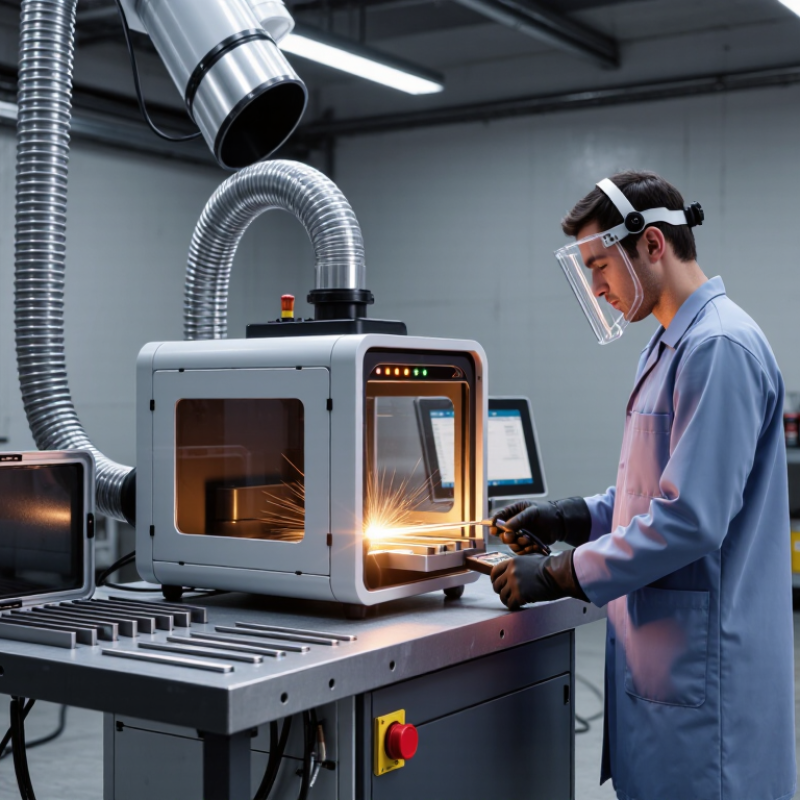
Top 10 Answers to How Safe Is Laser Welding Technology?

Laser Classes and MPE Values: Why Most Welding Systems Are Class 4

Laser safety starts with classification, not guesswork. Under IEC 60825-1, Class 4 lasers can cause immediate eye or skin injury from direct or reflected beams. They may also create fire risks. OSHA’s Technical Manual describes Class 4 radiation as hazardous during direct exposure and potentially dangerous from diffuse reflections. Most open or partially enclosed welding systems fall into this class because their infrared beam can exceed the accessible emission limits.

MPE means maximum permissible exposure.

It is not one universal number. ANSI Z136.1-2022 calculates MPE values using wavelength, exposure duration, pulse pattern, and viewing conditions. A brief reflected exposure may have a different limit from continuous welding exposure.

For example, a 1,070-nanometer beam is invisible, so the natural blink response offers little protection. A shiny fixture can redirect energy toward an operator’s face. That detail is easy to miss. The weak point is often not the laser source, but the work area.

Tips: Confirm the wavelength and operating mode before choosing eyewear. Check its optical density for the actual beam range. Use interlocked enclosures, beam stops, warning indicators, and controlled access. OSHA and ANSI guidance also support written procedures, trained laser safety personnel, and documented inspections. A Class 1 enclosure can reduce accessible exposure during normal operation, but opening panels may restore Class 4 hazards. Labels alone are not enough. Review reflections, maintenance tasks, and changing fixtures regularly.

1064 nm Beam Hazards: How Infrared Light Threatens Eyes and Skin

A 1064 nm welding beam is invisible, but invisible does not mean harmless. This near-infrared wavelength can pass through the eye’s front surfaces and focus on the retina. A direct or mirror-like reflection may create a small burn before the operator notices pain. The retina has no pain receptors, according to NIOSH laser-safety guidance. Vision damage can therefore appear later.

The risk is not limited to direct exposure. Shiny metal edges, clamps, and unfinished weld pools can redirect intense radiation across a workshop. OSHA classifies high-powered welding lasers as Class 4 hazards when they can injure eyes or skin through direct, reflected, or scattered radiation. OSHA also reports that about 2,000 U.S. workers suffer job-related eye injuries daily, although most are not laser-specific. That figure still exposes a practical weakness: ordinary safety glasses are not automatically suitable for 1064 nm radiation.

Skin exposure may cause rapid heating, redness, or a deeper thermal injury. The International Electrotechnical Commission’s IEC 60825-1 standard requires hazard classification, while ANSI Z136.1 supports controlled areas, beam enclosures, interlocks, and wavelength-specific eyewear. A dark lens can look reassuring yet provide poor protection. That is an uncomfortable mistake. Operators should verify the eyewear’s optical density at 1064 nm, inspect barriers for gaps, and treat every polished surface as a possible beam path. One missed reflection can matter.

Interlocked Enclosures and Beam Stops Under IEC 60825-1

Top 10 Answers to How Safe Is Laser Welding Technology?

Laser welding is safer when the beam is physically contained, not merely controlled by software. Under IEC 60825-1, the laser product must be classified according to accessible emission and foreseeable use. An interlocked enclosure supports this goal by stopping emission when a door, panel, or access gate opens. The enclosure should block direct and reflected radiation at the expected wavelength and power. Small gaps matter.

In practical commissioning, technicians should test every interlock separately. Opening a door should stop the beam quickly and require a deliberate reset. The reset control should remain outside the hazardous area. Never rely on a key switch alone. Beam stops provide another barrier when the workpiece, fixture, or robot position changes. They must withstand the beam’s power, exposure time, and possible reflection. A dull metal surface may still create a dangerous reflection.

Good safety work includes written inspection records, controlled access, warning signs, and trained operators. Interlocks need scheduled testing, especially after maintenance. A bypass function can be necessary during service, but it should be restricted, logged, and supervised. This is where real systems can become imperfect. A loose panel, misaligned stop, or rushed reset test may defeat an otherwise strong design. IEC 60825-1 is important, but it does not replace a site-specific risk assessment. A qualified laser safety professional should verify the final arrangement before routine production begins.

Fume and Fire Controls for High-Temperature Laser Welding

Laser welding can be safe when fume and fire controls are designed around the real process, not an ideal one. High-temperature arcs and laser beams can heat coatings, oils, and nearby dust within seconds. Welding fumes may contain fine metal particles and gases from surface treatments. Local exhaust ventilation should capture fumes close to the weld pool. General room ventilation alone is often insufficient.

Use a fully enclosed welding area with interlocked access doors and suitable laser-rated viewing panels. Keep cardboard, solvents, rags, and packaging away from the work zone. A spark can travel farther than expected. Place a suitable fire extinguisher nearby, and inspect it regularly. Operators should check extraction airflow before production and stop work if it becomes weak. Filters need scheduled replacement, not only replacement after visible smoke appears. In practical inspections, a clean bench can still hide oily residue under fixtures. That detail is easy to miss.

Tips: Clean the joint before welding. Remove flammable coatings when appropriate. Review the material safety data before heating unknown alloys. Use protective eyewear, heat-resistant gloves, and flame-resistant clothing. Train operators to recognize unusual fumes, glowing debris, and rising temperatures. Record airflow checks, equipment faults, and near misses. A short log can reveal repeated problems. Do not rely on memory. Test emergency stops and door interlocks at defined intervals. If a control feels inconvenient, examine it rather than bypassing it. Safety systems sometimes fail because routine work makes people overconfident.

ANSI Z136.1, OD-Rated PPE, Training, and Lockout Procedures

Laser welding is generally safe when engineered controls, procedures, and worker behavior work together. ANSI Z136.1 provides a practical framework for evaluating laser hazards and selecting controls. A safety officer should classify the system, inspect beam paths, and document accessible exposure points. Enclosures must block stray reflections, not merely direct beams. Shiny fixtures can redirect energy toward hands, faces, or nearby walkways. That detail is often missed.

OD-rated PPE must match wavelength, pulse characteristics, and expected exposure, not just the laser’s power label. Operators should verify markings before each shift and replace scratched or damaged lenses. Protective eyewear is the last barrier, not permission to open an enclosure. Training should include setup, focus adjustment, emergency response, and reflection hazards. Use a real workpiece during practice. It exposes habits that classroom slides hide. Supervisors can ask workers to explain the beam path aloud. If they cannot, training is incomplete.

Lockout procedures matter during maintenance, alignment, and jam clearing. Isolate electrical, pneumatic, hydraulic, and stored optical energy where applicable. Apply personal locks, release residual energy, and verify zero energy before opening guarded areas. A written checklist helps, but it can become meaningless when copied without thought. Review it after near misses, equipment changes, or awkward access tasks. Keep records of training, inspections, and corrective actions.

FAQS

Why are many welding laser systems classified as Class 4?

Their beams can exceed safe accessible exposure limits. Direct and reflected beams may injure eyes or skin quickly. Fire is also possible.

What does MPE mean in laser safety?

MPE means maximum permissible exposure. It depends on wavelength, exposure time, pulse pattern, and viewing conditions. There is no single universal value.

Why is a 1,064-nanometer welding beam especially dangerous?

The beam is invisible and can reach the retina through the eye’s front surfaces. A reflected beam may cause damage before pain appears. Vision loss can develop later.

Can ordinary safety glasses protect against infrared welding beams?

Not automatically. Eyewear must specify suitable optical density for the actual wavelength and operating mode. A dark lens may still provide weak protection.

Which surfaces can redirect a hazardous welding beam?

Polished clamps, metal edges, fixtures, and unfinished weld pools may create dangerous reflections. Treat every shiny surface as part of the beam path.

How can an enclosure reduce laser exposure?

A properly designed enclosure can limit accessible radiation during normal operation. Interlocks should stop operation when panels open. Opening a panel may restore Class 4 hazards.

What safety controls should a welding area include?

Use beam stops, warning indicators, controlled access, protective barriers, and written procedures. Train responsible safety personnel and document inspections. Labels alone are not enough.

What should operators check before maintenance or fixture changes?

Confirm the wavelength, operating mode, barriers, interlocks, and possible reflections. Inspect gaps around panels and fixtures. Small changes matter.

Why can the work area be more dangerous than the laser source?

The source may be correctly installed, but a shiny fixture can redirect energy toward an operator’s face. That weak point is easy to miss.

Is a safety checklist always reliable?

No checklist is perfect. It may miss a new reflection or damaged barrier. Review the area repeatedly, especially after maintenance. Stay skeptical.

Conclusion

How safe is laser welding technology? Its safety depends on proper engineering controls, operating procedures, and worker training. Most industrial welding systems are Class 4 because they produce powerful, concentrated beams that can cause immediate eye or skin injury. The commonly used 1064 nm infrared wavelength is especially hazardous because it is invisible, can reach the retina, and may cause serious burns without triggering a natural blink response. Safe operation therefore requires a controlled work area, interlocked enclosures, beam stops, warning indicators, and safeguards designed according to IEC 60825-1 principles.

Additional risks come from intense heat, sparks, molten material, fumes, and potential fires. Effective ventilation, fire prevention measures, housekeeping, and suitable emergency procedures are essential. Operators should follow ANSI Z136.1-based practices, wear properly selected optical-density-rated protective equipment, complete task-specific training, and use lockout procedures during maintenance or alignment. With these layered controls consistently applied, laser welding can be a safe and productive process, but it should never be treated as inherently harmless or operated without a documented safety program.

Charlotte

Charlotte

Charlotte is a seasoned marketing professional with a deep understanding of the company's portfolio and a passion for elevating its presence in the market. With a keen eye for detail and a commitment to excellence, she ensures that our professional blog is regularly updated with insightful articles......