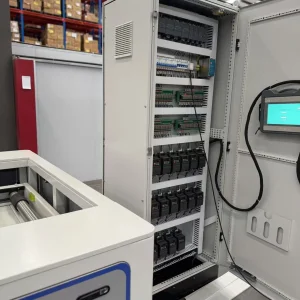
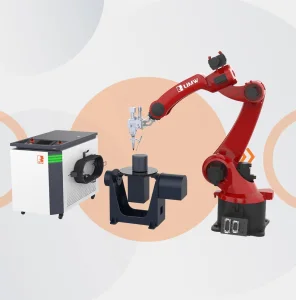
TMAXCN Brand 100mwh EV Battery Lithium Battery Prismatic Cell Manufacturing Line

Customization: Available
Production Scores: Multiple Varieties
Production Continuity: Continuous

Product Description

Basic Specifications
Model NO.
TMAX-PCML
Condition
New
Automation
Automatic
Certification
ISO, CE
Warranty
1 Year
Voltage
110V/220V
Product Introduction
Prismatic Cell Manufacturing Line
Prismatic Cell Overview:
The shell of the prismatic cell is mostly made of aluminum alloy and stainless steel. Utilizing internal winding or stacking processes, it offers superior protection compared to pouch cells. Cell safety is significantly enhanced over cylindrical batteries, making them highly popular for EV applications.
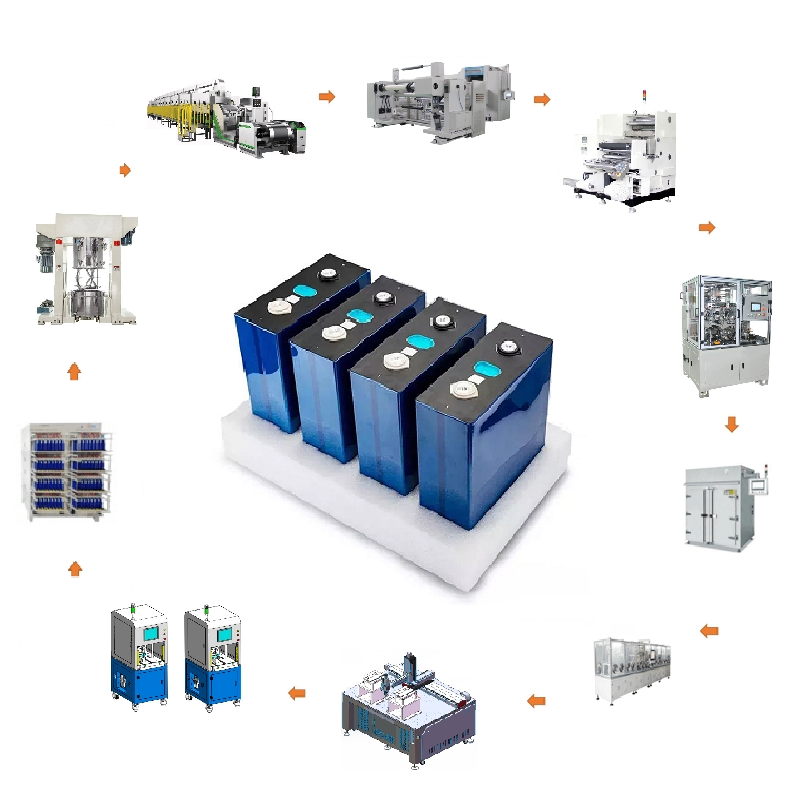
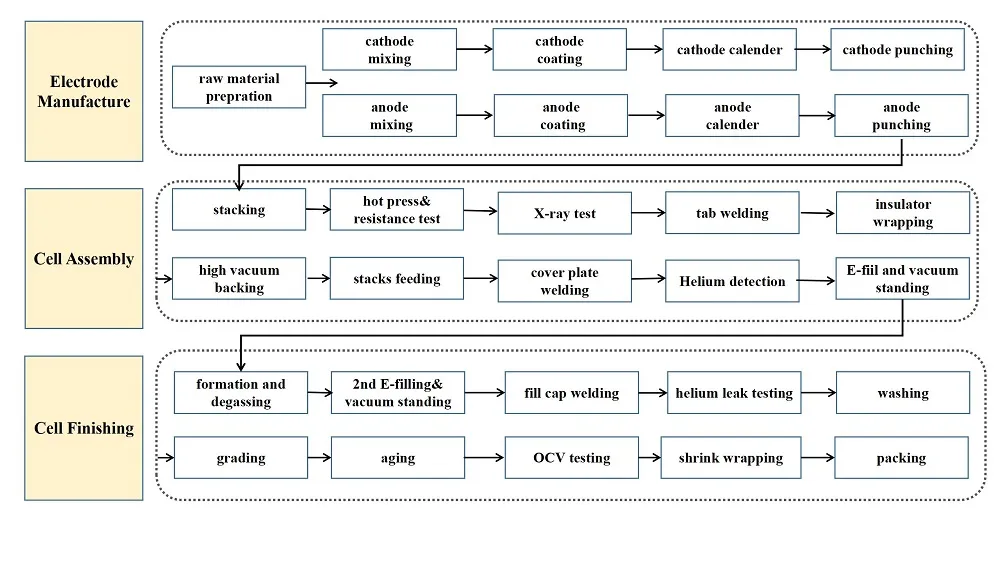
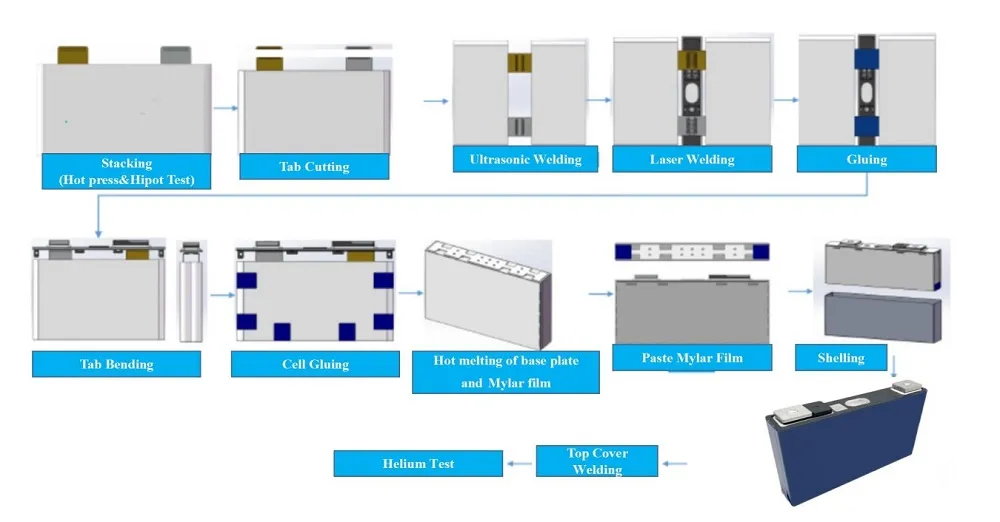
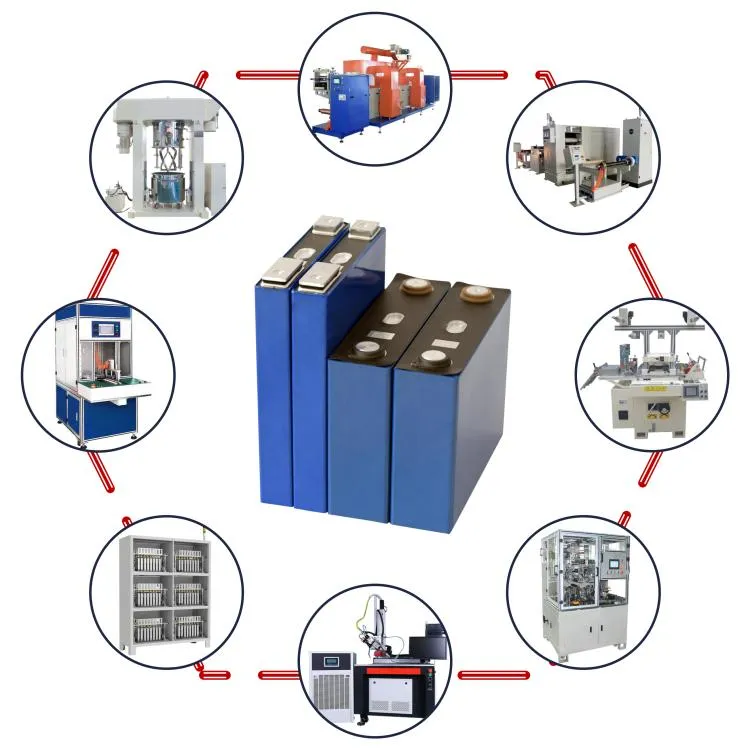
Production Process Flow
Process Flow
Core Equipment List
S NO. Equipment Name
1Cathode Mixer
2Anode Mixer
3Cathode Slot Die Coater
4Anode Slot Die Coater
5NMP Recovery System
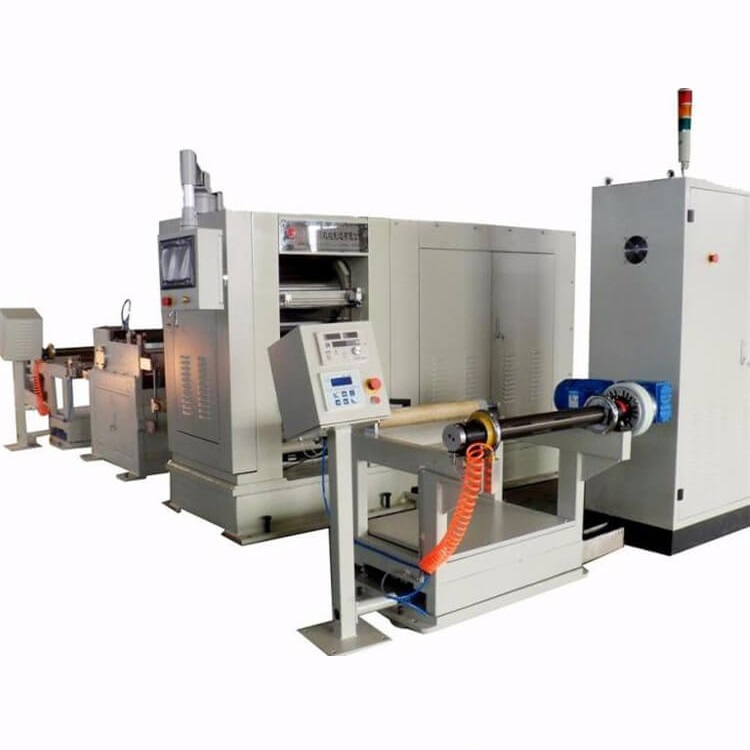
6Cathode Calender
7Anode Calender
8Cathode Slitting Machine
9Anode Slitting Machine
10Cathode Die Cutting Machine
11Anode Die Cutting Machine
12Auto Stacking Machine
13Hot Press Machine
14Ultrasonic Battery Core Pre Welding Machine
15Ultrasonic Battery Core Welding Machine
16Cover Plate Welding Machine
17Battery Core Film Covering Machine
18Integrated Machine for Shell Welding
19Primary Helium Testing Machine
20High Level Vacuum Oven
21Electrolyte Filling Machine
22Negative Pressure Forming Machine
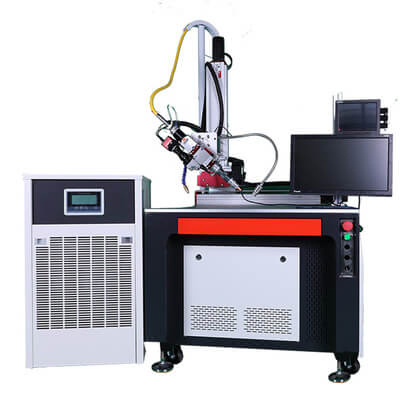
23Sealing & Laser Welding Machine
24Grading Machine
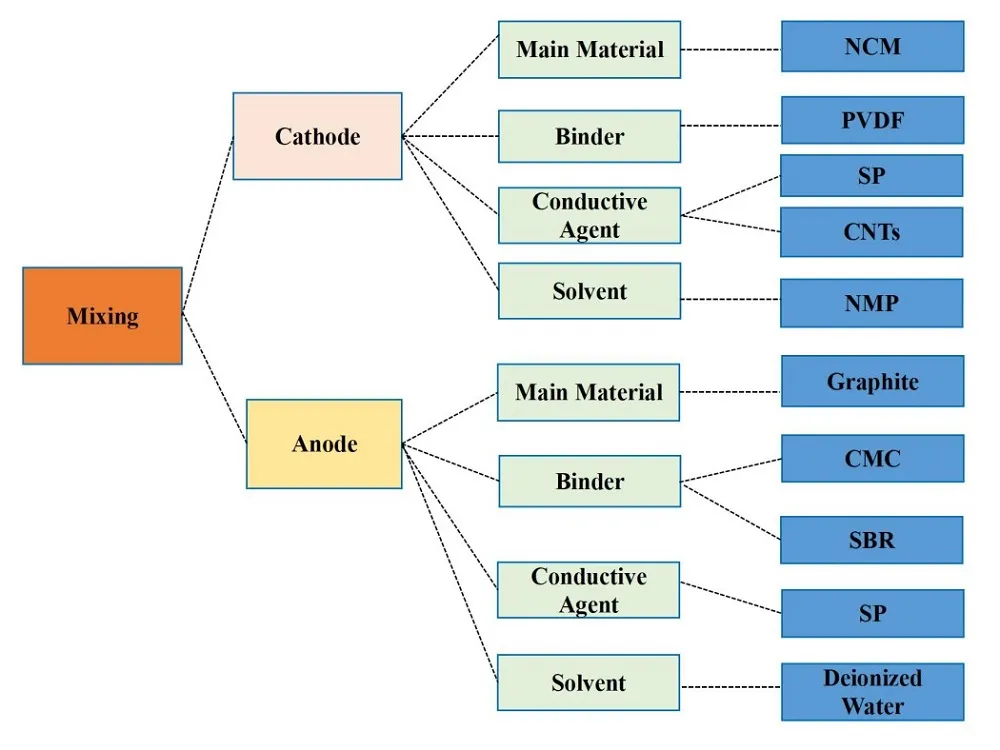
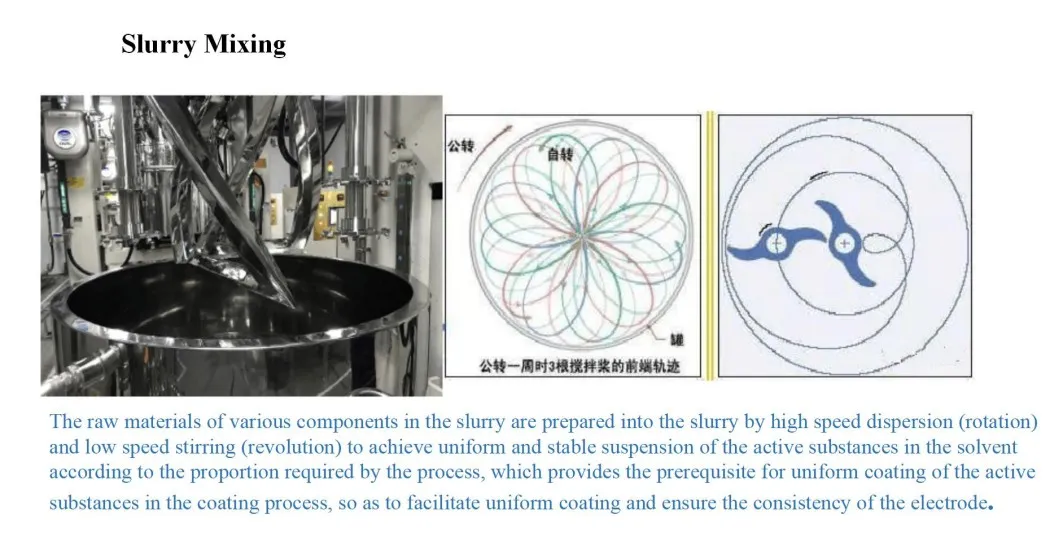
Mixing & Coating Details
Mixing
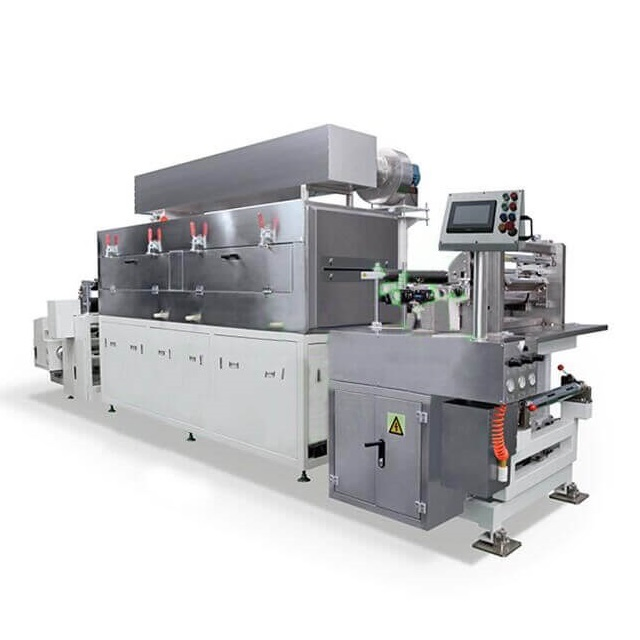
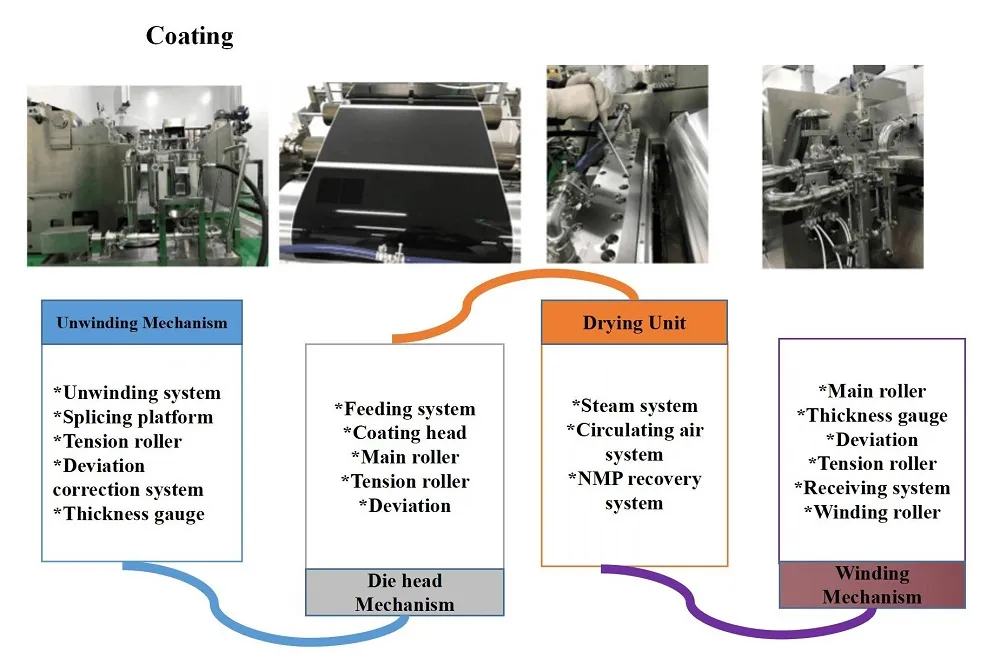
Coating
Electrode Coating Process:
Anodes and cathodes are produced by coating active electrode materials onto both sides of metallic foils (current collectors). The anode utilizes Carbon, while the cathode uses Lithium metal oxide. To prevent contamination that could ruin battery performance, anodes and cathodes are typically processed in separate, controlled environments.
Electrode Coating
Cell Assembly & Testing
Cell Assembly

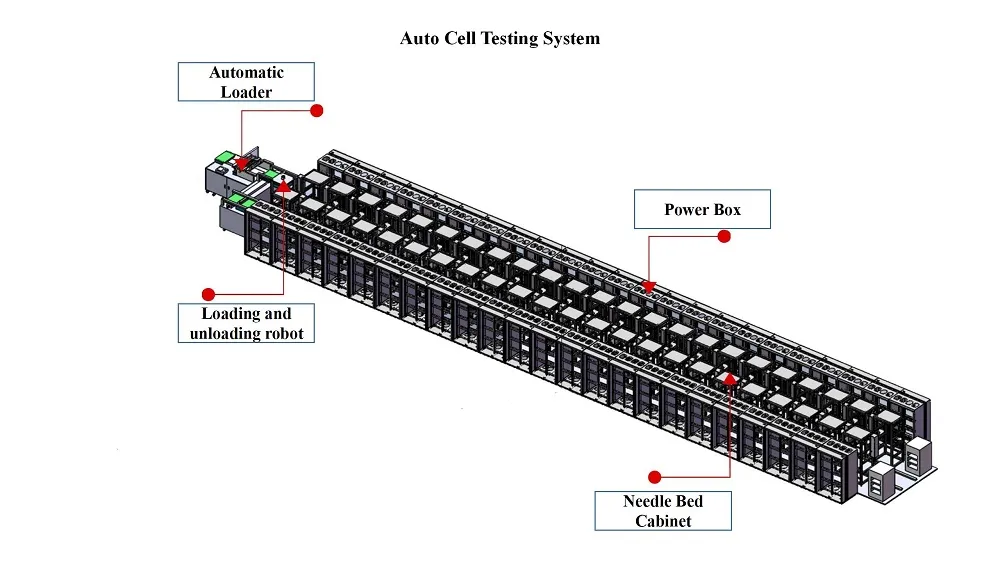
Auto Cell Testing System: Composed of an automatic loader, a rail robot, and 46 sets of automatic testers for maximum precision.
Testing System
PACK Assembly Features
The assembly line for prismatic cell modules includes automatic loading, OCV testing, sorting, cell cleaning, gluing, stacking, and laser welding. The process is optimized for high production efficiency and yield rates, specifically designed for large and medium-sized square aluminum shell batteries.
Battery Module
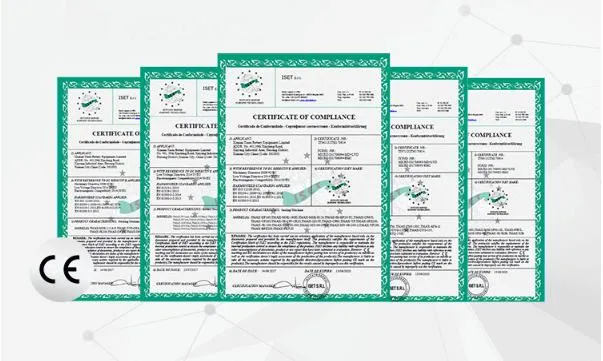
Certifications
Cert 1
Cert 2
Cert 3
Frequently Asked Questions
What are the primary materials used for prismatic cell shells?
The shells are primarily made from aluminum alloy and stainless steel to ensure durability and high safety standards.
What is the warranty period for the manufacturing line?
The standard warranty for the prismatic cell manufacturing line is 1 year.
How does the line prevent material contamination?
Anode and cathode materials are processed in separate rooms using dedicated equipment to avoid cross-contamination.
Is the equipment compatible with different voltages?
Yes, the system supports both 110V and 220V power configurations.
What kind of after-sales service is provided?
Engineers are available to service machinery overseas to ensure smooth operation and maintenance.
What certifications does the production line have?
The manufacturing line is fully certified with ISO and CE standards for international quality compliance.

Related Products